
Cancer
-

In the Lab The Fattahi laboratory focuses on developing advanced human tissue models, including organ-on-a-chip systems and vascularized organoid arrays, to investigate how high-risk environmental exposures impact human health. By integrating bioengineering, stem cell biology, and multi-omics profiling, the team aims to recapitulate essential physiological functions in vitro to study tissue injury, repair, and disease…
-

In the Lab Dr. Liu’s research is centered around harnessing the capabilities of micro/nano-fluidic technologies to advance patient health outcomes. A pivotal aspect of his research program revolves around the development of microfluidic platforms with the purpose of revealing the intricate relationships between cellular phenotypes and molecular expressions at the single-cell level. This pursuit holds…
-

In the Lab The Zhao group is focused on innovating novel approaches to improve magnetic resonance (MR) imaging physics at cellular level for early detection and therapeutic treatment of cancers, for tracking of stem cells, and for other biophysical and biomedical applications. MRI-based cell tracking using super-paramagnetic iron oxide (SPIO) particles provide an excellent means…
-

In the Lab The Xie lab is interested in engineering nanoparticles, either nanocrystal-, polymer- or protein-based, for imaging and drug delivery, with a focus on cancer. These involve developing novel materials with unique physical and chemical properties. Moreover, the lab device surface coatings of nanoparticles to impart functionalities and tailor the particles’ roles as imaging/therapy…
-

In the Lab The goal of Cai lab is to interrogate the molecular mechanisms in facilitation of tumor progression and provide the scientific rationale for cancer treatment. Numerous oncogenic proteins require fatty acyl modifications to carry out their functions in cancer cells. Protein acylation, including myristoylation and palmitoylation, is particularly essential for leading these proteins…
-

In the Lab The mission of Mao lab is two fold. For research, our goal is to exploit the science of magnetism and behavior of ferrofluids to design better solutions for biomedical research. Our expertise in this area includes nanoscale magnetism, micro/nano-technology, microfluidics, cancer diagnostics, stroke treatment strategies, and lab-on-a-chip systems for single cell studies.…
-

In the Lab One of the major challenges in neurobiology is understanding the cellular and molecular mechanisms underlying development of the vertebrate central nervous system (CNS). Research in our laboratory seeks to elucidate these mechanisms by studying development of the vertebrate forebrain and visual system. We study these systems by taking advantage of mutations that…
-
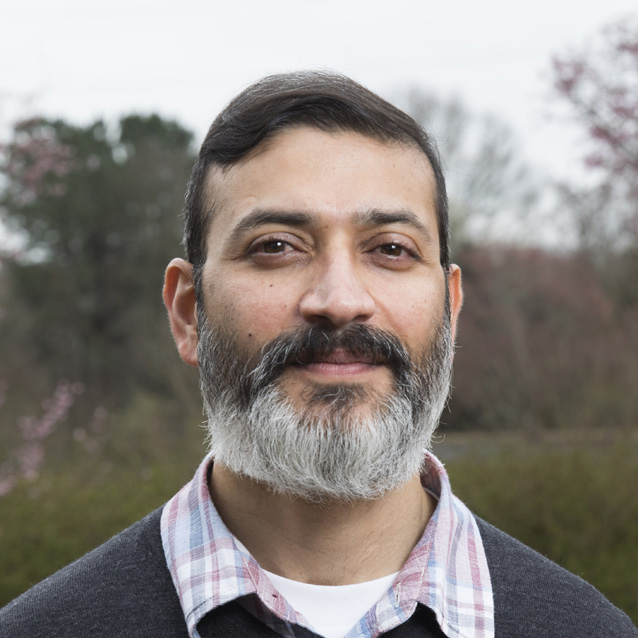
Ph.D., The University of Georgia M.S., Griffith University, Brisbane, Australia B.S., Bangalore University, Bangalore, India In the Lab Carbohydrates are an important and often underappreciated class of biological macromolecules that play important roles in development, and in repair and regeneration post-injury. Defects in carbohydrate biosynthesis and alterations in carbohydrate composition are known to result in…
-

Diplomate, American College of Veterinary Pathologists PhD (1986) The University of Georgia DVM (1978) Michigan State University In the Lab Waterfowl are considered the natural reservoir of low-virulence Newcastle disease viruses (loNDVs) and low-pathogenic avian influenza viruses (LPAIVs). The objective of this study was to investigate the effect of co-infections with loNDV and LPAIV on…
-

In the Lab Chromatin configuration in the nucleus or germinal vesicle (GV) of mammalian oocytes undergoes dynamic epigenetic modifications during oocyte growth. A crucial developmental transition at the culmination of oogenesis, large-scale chromatin remodeling in the GV is essential to confer the female gamete with meiotic and developmental potential. Using several models for the experimental…